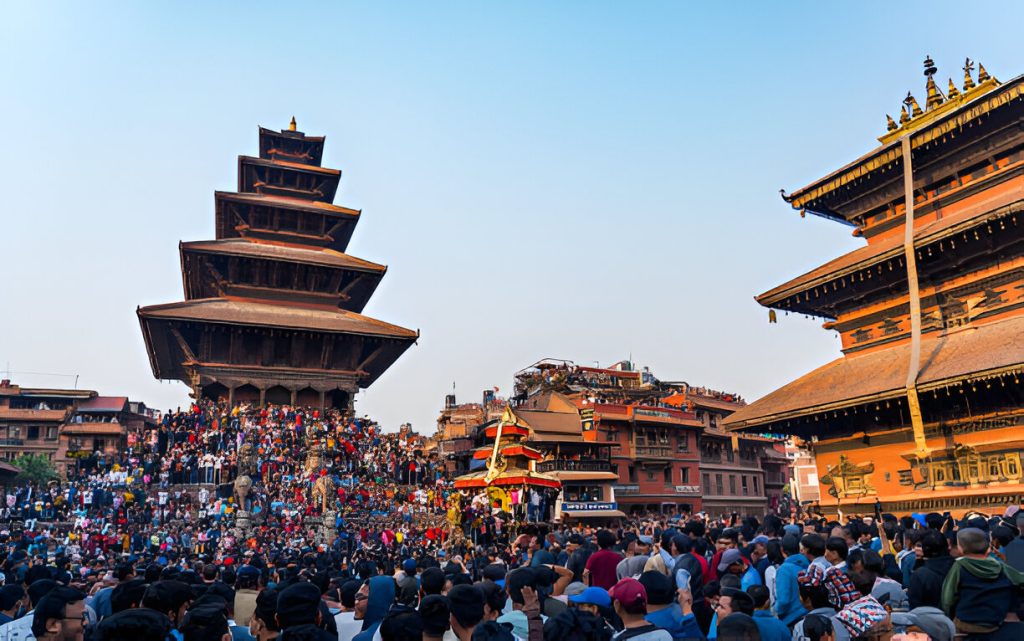
There has been increased organization of spiritual fests across different cities and countries. These gatherings, which unite participants of different faiths, have become a strong and active trend in our modern society. Community members gather to pray, sing, and dance as one, even as they engage and learn about the various facets of religion. These festivals usually consist of workshops, lectures, music, meditation, and discussions that focus on spiritual and physical health.
They provide a platform where people can practice religious beliefs, make friends, and perform activities that are good for their health. The majority of them also provide a place for healing, where people can undergo Reiki, massage, and other sorts of energetic treatments. Thus, they create a place where people can come in search of healing physically, emotionally, or even spiritually.
This article will examine the reasons for the rise in these spiritual festivals.
Reasons for Rise in Spiritual Festivals
There are several reasons behind the emergence of spiritual festivals. In search of harmony, meaning, and an increasing feeling of self-discovery, people are striving to add more value to their constantly busy lives. Hence, these festivals present a freedom concerning spiritual activities that allows people to turn off everyday life and focus on spiritual discovery.
Let’s look at some possible causes for the increase in the number of spiritual festivals.
Change from Modern Lifestyle
The world today is busy and stressful, with long working days and the unending demands of everyday tasks. Organized spiritual events are a great help in this regard, as such celebrations give people an opportunity to walk away from their routine work and get an opportunity to take care of their personal and spiritual needs.
Most spiritual festivities take place outside in the natural environment, and some common locations include forests, mountains, and beaches. These locations facilitate attendees’ getting close to Mother Nature. This kind of break has proven to provide inner healing and can make people more focused.
Due to the openness of spiritual festivals, participants gain knowledge and learn different practices and viewpoints. That enables them to discover the things that they have not tried and perhaps seek what might suit them, such as new ways of practicing meditation, different methods of attaining well-being, or ways of viewing life.
Human Design Self-Reflection
Human Design is a system that produces a script for a person’s life and character and places them on a given energy type, which has its own strategy for making decisions. The Human Design chart is becoming widely used in the spiritual world as more individuals discover their correct roles, fondnesses, energies, and methods of surviving life challenges.
These Human Design types have different ways of approaching the world and making choices. Thus, by knowing their type, people will be in a position to live, socialize, and even have spiritual fellowship in a manner that truly suits and fulfills them. This has contributed to the rising spiritual festivals that seek to connect spiritual people.
Organizers of spiritual festivals are also gradually turning to Human Design because they understand that its application will help create a positive and constructive atmosphere. With knowledge of the various types of Human Design, festival organizers are in a position to organize the festival so that all the participants have a quality experience.
For instance, while creating a motivational session about Generators (a type of Human Design), a trainer might devise active concepts such as yoga classes. Meanwhile, when devising a motivation session regarding another type, Projectors, he/she is likely to devise concepts like a lecture or a group discussion session involving meditation.
Opportunity for Personal Growth
Spiritual festivals are thus focused on a person’s spiritual development. They challenge people to attend as spectators and to discover the other part of them that they never used to know they possessed. The purpose of the series of workshops, classes, and spiritual experiences offered at spiritual festivals is to nurture such shifts and offer tools and perspectives for continued unlearning and integration beyond the festival.
Most festivals provide participants with guidance on how to meditate and practice it to clear their minds from stress and achieve focus on life. There is mostly aerobics and the practice of Yoga, Tai Chi, or dancing, as seen in spiritual carnivals. None of these activities are merely exercise-related; they are about the health of the participants’ minds, bodies, and souls.